المقدمة
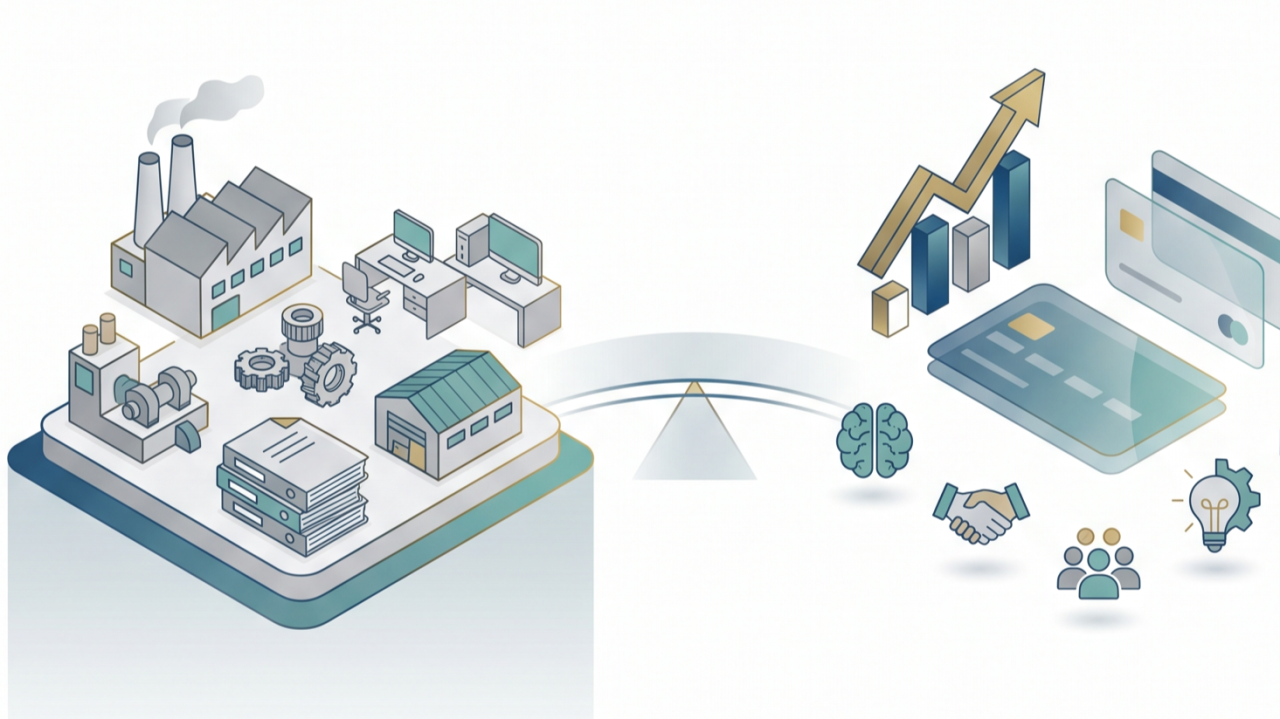
التقييم ليس مجرد وسيلة لمعرفة قيمة الشركة، بل وسيلة لفهم أين تكمن هذه القيمة. ومع ذلك، تبدأ معظم النقاشات من سؤال واحد: "ما قيمة الشركة؟" بينما السؤال الأهم من منظور الإدارة والاستثمار هو: "ما الذي يصنع هذه القيمة؟" والفرق بين السؤالين ليس لفظيًا، بل هو الفرق بين رقم نغلق به ملفًا، وفهمٍ نبني عليه قرارًا.
الخطأ الشائع في قراءة الفرق
عندما تتجاوز قيمة الشركة صافي أصولها الملموسة، يتجه التفسير مباشرة إلى أن الفرق ناتج عن أصول غير ملموسة. لكن قبل تحليل هذا الفرق، هناك سؤال يجب أن يسبق كل شيء: هل قُيّمت الأصول الملموسة بقيمتها العادلة؟
السبب أن أي نقص في تقدير الأصول الملموسة لا يختفي من التقييم، بل ينتقل إلى الفرق المتبقي. والنتيجة أن القيمة المنسوبة للأصول غير الملموسة تتضخّم، وتتكوّن صورة غير دقيقة عن مصادر القيمة الحقيقية داخل الشركة.
مثال يوضح الفكرة
لنفترض أن قيمة الشركة = 100 مليون ريال.
إذا كانت القيمة العادلة للأصول الملموسة = 80 مليون ريال، فإن الفرق = 20 مليون ريال. أما إذا قُدّرت الأصول الملموسة عند 60 مليون ريال فقط، فإن الفرق يرتفع إلى 40 مليون ريال.
والسؤال هنا: هل تغيّرت الشركة؟ لا. هل تغيّرت قدرتها على تحقيق الأرباح؟ لا. هل ظهرت مصادر قيمة جديدة؟ لا. الذي تغيّر فعليًا هو طريقة تفسير القيمة، لا القيمة نفسها.
الفرق ليس رقمًا واحدًا
من المهم إدراك أن الفرق بين قيمة الشركة وأصولها الملموسة ليس مجرد رقم متبقٍ، وليس بالضرورة عنصرًا واحدًا. فقد يعكس مجموعة متنوعة من مصادر القيمة الاقتصادية، مثل العلامات التجارية، والعلاقات التعاقدية، وقواعد العملاء، والتقنيات والبرمجيات، والحقوق الفكرية، وغيرها من الأصول التي يجب فهمها وتحليل كلٍّ منها على حدة قبل الوصول إلى أي استنتاج.
من قضية محاسبية إلى قرار استراتيجي
هنا يتحول التقييم من إجراء محاسبي إلى أداة استراتيجية. فالإدارة لا تحتاج إلى معرفة قيمة الشركة فحسب، بل تحتاج إلى معرفة: ما الأصول التي تولّد القيمة فعلًا؟ وما مصادر الميزة التنافسية؟ وأين يجب توجيه الاستثمارات؟ وما الذي يستحق الحماية والتطوير للحفاظ على القيمة مستقبلًا؟ فالشركات لا تبني استراتيجياتها على الأرقام، بل على فهم ما وراء الأرقام.
الخلاصة
تقييم الأصول الملموسة بدقة ليس خطوة فنية في عملية التقييم، بل هو الأساس الذي تُبنى عليه قراءة صحيحة لمصادر القيمة، وبالتالي قرارات أفضل في الاستثمار والنمو وتخصيص رأس المال. التقييم الجيد لا يجيب فقط عن سؤال "كم تبلغ قيمة الشركة؟"، بل عن السؤال الأهم: "ما الذي يصنع هذه القيمة؟"
Introduction
Valuation is not merely a way to determine a company's value; it is a way to understand where that value lies. However, most discussions begin with one question: "What is the value of the company?" while the more important question from a management and investment perspective is: "What creates this value?" The difference between the two questions is not semantic; it is the difference between a number with which we close a file and an understanding upon which we build a decision.
The Common Mistake in Interpreting the Difference
When the value of a company exceeds the net value of its tangible assets, the explanation immediately turns to intangible assets as the source of the difference. But before analyzing this difference, there is one question that must come first: Have the tangible assets been valued at their fair value?
The reason is that any understatement in the valuation of tangible assets does not disappear from the valuation; rather, it is transferred to the remaining difference. The result is that the value attributed to intangible assets becomes inflated, creating an inaccurate picture of the true sources of value within the company.
An Example to Illustrate the Idea
Suppose the value of the company equals SAR 100 million.
If the fair value of the tangible assets equals SAR 80 million, then the difference equals SAR 20 million. However, if the tangible assets are valued at only SAR 60 million, then the difference rises to SAR 40 million.
The question here is: Has the company changed? No. Has its ability to generate profits changed? No. Have new sources of value appeared? No. What has actually changed is the way the value is interpreted, not the value itself.
The Difference Is Not a Single Number
It is important to realize that the difference between a company's value and its tangible assets is not merely a residual figure, nor is it necessarily a single element. It may reflect a variety of sources of economic value, such as brands, contractual relationships, customer bases, technologies and software, intellectual property rights, and other assets that must each be understood and analyzed separately before reaching any conclusion.
From an Accounting Issue to a Strategic Decision
This is where valuation shifts from an accounting exercise to a strategic tool. Management does not only need to know the value of the company; it also needs to know: Which assets actually generate value? What are the sources of competitive advantage? Where should investments be directed? And what deserves protection and development to preserve value in the future? Companies do not build their strategies on numbers, but on an understanding of what lies behind those numbers.
Conclusion
Accurately valuing tangible assets is not merely a technical step in the valuation process; it is the foundation upon which a correct understanding of value sources is built, leading to better decisions in investment, growth, and capital allocation. A good valuation does not answer only the question, "What is the value of the company?" but also the more important question: "What creates this value?"